
The Meaning Behind A Title
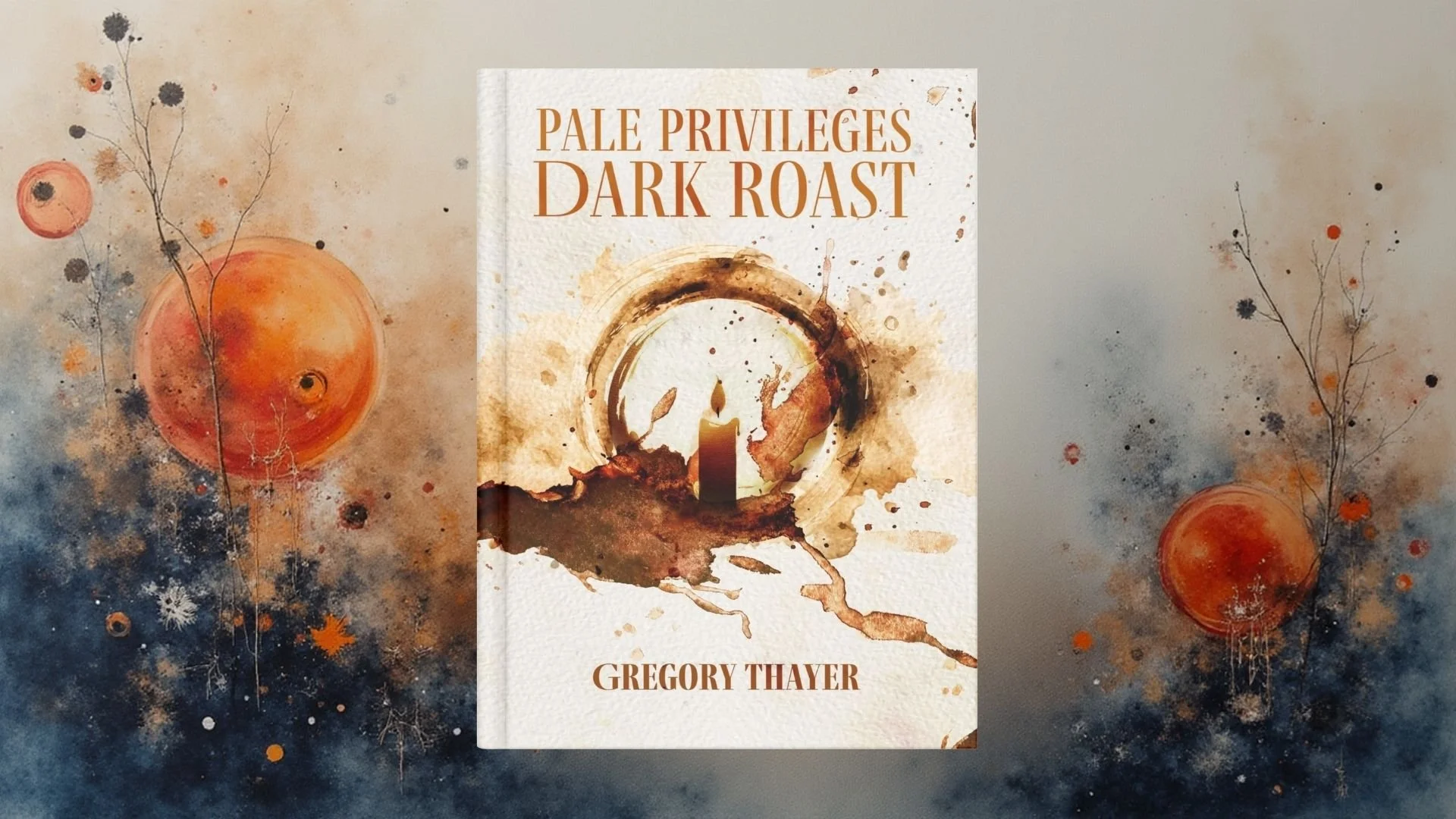
I knew that a title like Pale Privileges, Dark Roast would strike some as provocative. That was intentional. I wanted to create a moment of pause. But I also wanted that pause to lead somewhere, because the book is not only about privilege and exclusion. It is about conscience, friendship, and finding the courage to act despite personal costs.
The title took a few forms before it arrived here, but what finally made the title feel right was that it could hold several meanings at once. But one constant through all the variations was one thing: coffee.
The jacket makes that clear: a cup spills from the back cover to the front, leaving a ring stain at the center. But the image is not there simply for style.
Coffee runs through this story the way food runs through Laura Esquivel’s Like Water for Chocolate: not as decoration, but as ritual, mood, and meaning. Cody is a self-described coffee obsessive, teased by his friends and fiancée, and nicknamed “Caffeine Cody” by coworkers. His café becomes an emotional anchor—always ordering the same thing: an Americano, hot, black.
The beverage begins in the novel as something ordinary: a habit, a refuge where Cody goes when he needs distance from the noise. But over time, it becomes a language for the book itself. It offers a way to think about comfort and bitterness, surface and stain, awakening and cost.
Pale Privileges names the comforts that can pass as normal when they are really advantages: being assumed to belong, being given the benefit of the doubt, being welcomed by systems that quietly screen others out.
Cody begins the book focused inward, absorbed in his own financial peril, career anxieties and personal drama, largely unaware of the systems operating around him. And when he is aware, it’s only in terms of how it impacts him.
In coffee, a dark roast has been through intense heat. It's bold, bitter, harder to take. In the story, it represents the harsh truths that Cody never had to consider, not because someone shielded him from them, but because nothing in his world required him to look.
At its core, Pale Privileges, Dark Roast examines what happens when someone in a broken system finally opens their eyes—and what it costs to keep them open. It's about the gap between staying silent and speaking up, between self-preservation and doing what's right. It's about an unlikely friendship between two people who see the world differently and how that friendship changes both of them.
This book is the first of a trilogy, each set within a different institution, challenging Cody and Anne in new ways. What remains constant is the question: How do you hold on to your humanity inside systems that erode it?
Coffee is the constant across all three books, because it too is a process.
Raw beans don't taste like anything. They have to be roasted, which means heat, pressure, and transformation. Some prefer the light roast—gentle, easy, familiar. Others prefer the dark—bold, bitter, honest. And some pour in enough creamer and sugar to turn it into something else entirely.
And sometimes you don't really get to choose. Life roasts you whether you're ready or not.
The only question is whether you pay attention to the flavor.